This article will discuss the Best Algorand (ALGO) Wallets in 2026 to store your ALGO, earn governance rewards, and interact with Algorand’s expanding DeFi and real-world asset ecosystem. As Algorand adoption grows among institutions, NFT creators, and DeFi protocols, picking a secure wallet matters more than ever. We cover self-custody wallets with strong security, governance staking support, and smooth dApp access. But first, a quick look at what Algorand is and where you can buy it.
Let’s get this started!
About Algorand
Algorand is a layer‑1 blockchain built on Pure Proof‑of‑Stake, launched in 2019 to deliver instant finality, low fees, and high throughput without sacrificing decentralization. The network has since become one of the few carbon‑negative blockchains and carved out a niche in tokenized real‑world assets, stablecoins, and institutional‑grade DeFi.
By 2026, Algorand hosts a maturing on‑chain economy that includes lending markets, DEXs such as Tinyman and Pact, liquid staking protocols, NFT marketplaces, and sovereign digital identity tools. Its ability to handle over 10,000 transactions per second with immediate finality continues to attract developers and enterprise users. While competition among layer‑1 networks remains intense, Algorand’s focus on institutional partners and regulated financial applications sets it apart.
The network’s upgradeability and consistent uptime have also made it a reliable environment for high‑value transfers and central bank digital currency pilots. Read : Algorand Price Prediction
ALGO Token
ALGO is the native token used for transaction fees, governance voting, and securing the network through staking. Algorand transitioned from passive participation rewards to a governance‑based staking model in 2022, meaning holders must commit ALGO during quarterly governance periods to earn rewards. By 2026, billions of ALGO are regularly locked in governance, with participants voting on protocol upgrades, ecosystem fund allocations, and key economic parameters.
Best Algorand (ALGO) Wallets in 2026
Several trusted software wallets, mobile apps, and hardware wallets support ALGO. The best choices combine strong private‑key encryption, governance voting access, and native dApp connectivity for DeFi and NFT use. Below are the top picks, ranging from official Algorand‑native wallets to multi‑chain options that cater to broader portfolios.
Below is the list of the significantly supported wallets of ALGO.
1. Pera Wallet
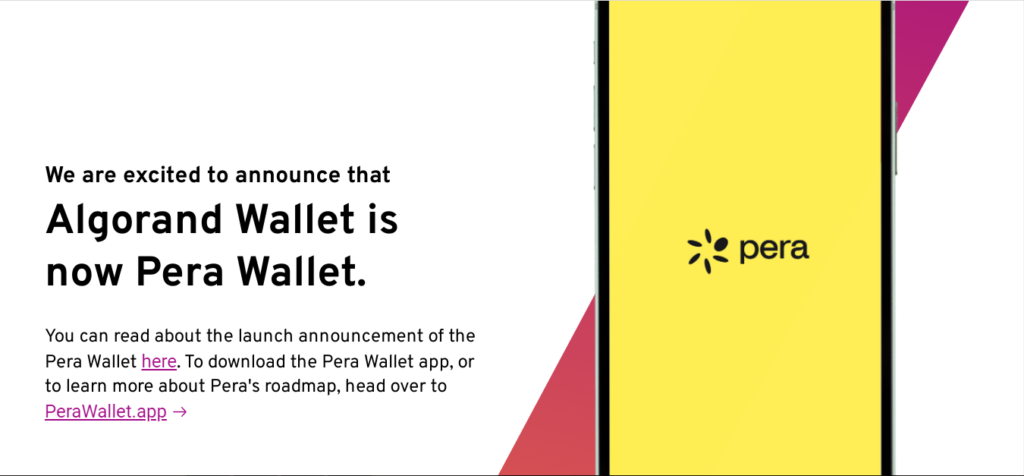
Pera Wallet is the official Algorand mobile wallet and the most deeply integrated entry point into the ecosystem. Originally launched as the Algorand Wallet, it has since been rebranded and expanded to become the default self‑custody choice for governance staking, NFT management, and dApp interactions.
Pera Wallet supports ALGO, every ASA (Algorand Standard Asset), and direct WalletConnect integration, allowing users to seamlessly connect to Tinyman, Pact, Folks Finance, and other DeFi protocols. Governance voting is built into the interface, making quarterly commitments simple. Security features include biometric authentication, encrypted private‑key storage, and full Ledger Nano X compatibility. For anyone serious about the Algorand ecosystem, Pera remains the safest and most functional default wallet in 2026.
Key Features:
- Native governance staking and voting directly inside the app.
- Deep WalletConnect support for every major Algorand dApp.
- Biometric security and optional Ledger hardware wallet pairing.
- NFT gallery and ASA portfolio tracking in a clean, mobile‑first interface.
2. Defly Wallet
Defly Wallet has become the go‑to mobile wallet for active Algorand DeFi traders. While Pera covers broad ecosystem needs, Defly is laser‑focused on speed, trading execution, and advanced on‑chain insights.
Defly stands out for its built‑in DEX aggregator, which sources liquidity across Tinyman, Pact, and Humble to give users the best token swap rates without leaving the app. The wallet also delivers real‑time price alerts, portfolio performance tracking, and transaction simulation before signing. Governance participation is supported, and the entire experience is designed for traders who move quickly between positions.
Private keys remain encrypted on‑device, and Defly never collects personal data. Combined with Ledger support, it serves both casual and professional market participants.
Key Features:
- Integrated DEX aggregator pulling liquidity from all major Algorand automated market makers.
- Transaction preview and simulation before on‑chain confirmation.
- Real‑time pricing, charts, and custom alerts for ASA tokens.
- Governance staking with one‑tap commitment and vote submission.
3. Atomic Wallet
Atomic Wallet remains a strong multi‑asset non‑custodial wallet that supports over 500 digital currencies, including full ALGO and ASA integration. It suits investors who manage a diversified portfolio across multiple chains and want a unified dashboard.
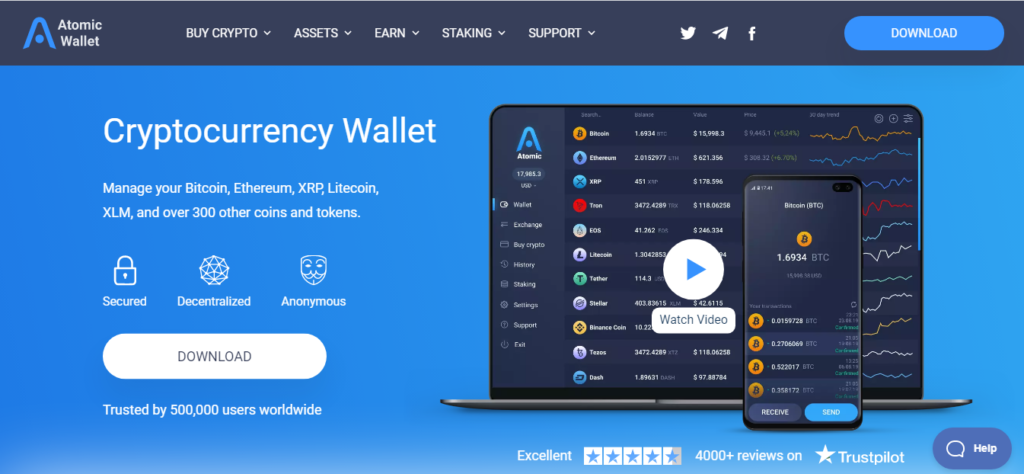
Atomic Wallet stores encrypted private keys locally on the user’s device and has maintained a clean security track record. The in‑app swap feature lets you exchange ALGO for other assets without leaving the interface, and users can connect to Algorand governance portals via WalletConnect. There is no KYC requirement, and the software is available on Windows, macOS, Linux, iOS, and Android. Also Read: Best Kusama Wallets
Key Features:
- Multi‑chain support for over 500 assets, including ALGO and popular ASAs.
- 24/7 live customer support and in‑app exchange.
- Encrypted private keys stored locally with no KYC required.
- Desktop and mobile apps with consistent user experience.
4. Exodus
Exodus has built a reputation as one of the most visually polished self‑custody wallets, and it added strong Algorand support several years ago. By 2026, its desktop and mobile applications fully support ALGO storage, governance staking via integrated dApp connections, and in‑app swaps with other assets.
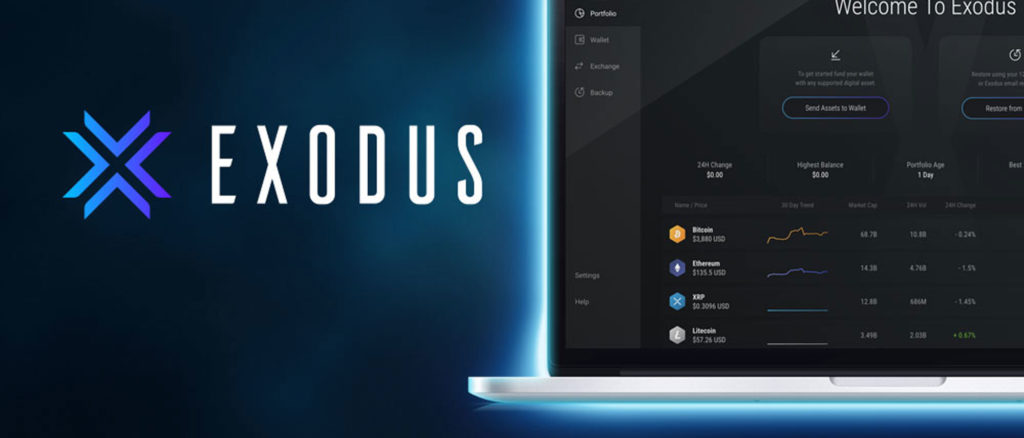
Exodus integrates with Trezor hardware wallets for users who want to combine a software interface with cold storage. Its portfolio dashboard makes it easy to track real‑time performance, and customer support is notably responsive compared with many crypto wallets. While it’s not Algorand‑native, Exodus works well for those who prize design, multi‑chain ease, and fiat on‑ramps.
Key Features:
- Beautifully designed desktop and mobile apps with built‑in exchange.
- Trezor hardware wallet integration for offline key storage.
- Multi‑asset portfolio tracking with live charts and profit/loss views.
- Fiat on‑ramp options and 24/7 human support.
5. Coinomi Wallet
Coinomi remains a privacy‑focused multi‑chain wallet that supports Algorand and a large range of other blockchains. Established years ago, it still offers a reliable desktop and mobile experience for users who prefer a lightweight, no‑KYC solution.
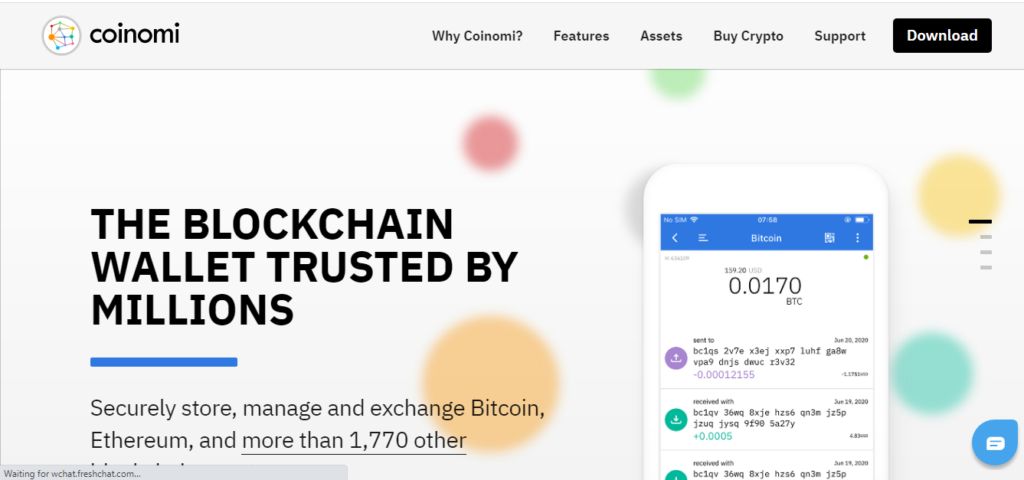
Private keys are encrypted and stored locally, and Coinomi does not link transactions to IP addresses or identities. Algorand support includes basic send/receive functionality and the ability to connect to dApps via WalletConnect, though governance participation may require an external interface. The wallet’s long track record and emphasis on anonymity make it a decent companion for ALGO holdings that don’t need daily trading.
Key Features:
- Supported across Windows, macOS, Linux, iOS, and Android.
- Native swap and exchange features across hundreds of assets.
- Privacy‑first design with no KYC and no IP‑tracking.
- 24/7 live assistance and a long, unbroken security history.
Where to buy Algorand (ALGO)?
ALGO is widely available on major centralized exchanges including Binance, Coinbase, Kraken, OKX, and KuCoin. It is also accessible on decentralized exchanges native to Algorand such as Tinyman, Pact, and Humble, which allow trustless swaps against other ASA tokens. Regional on‑ramps and peer‑to‑peer platforms have added further liquidity. Trading volume is well distributed, reducing reliance on any single venue.
Conclusion
Algorand’s ecosystem has matured significantly, and the wallet infrastructure has kept pace. Pera Wallet remains the official mobile hub for governance, NFTs, and dApps, while Defly adds a trading‑focused edge for active DeFi users. Multi‑chain options like Atomic Wallet, Exodus, and Coinomi provide flexibility for those holding diverse portfolios beyond Algorand.
The right wallet depends on how you use ALGO. Governance voters will prefer Pera’s native voting flow; traders might lean toward Defly. Long‑term investors can enhance security by pairing any of these wallets with a hardware device such as Ledger or Trezor.
Whichever wallet you choose, follow standard self‑custody practices. Write down your seed phrase, store it offline, and never share it. A hardware wallet adds the strongest layer of protection if your ALGO holdings are significant.