In this article, we will explore some of the Best Near Protocol (NEAR) Wallets in 2026 available in the market right now. NEAR Protocol has matured into one of the more developer-active layer‑1 blockchains, with its sharded architecture, chain abstraction stack, and growing user base making wallet choice increasingly important. This article covers the top wallets for storing NEAR, earning staking yield, and accessing the broader NEAR ecosystem.
Let’s dive into the crux of the content!
Near Protocol (NEAR) in a Nutshell
Near Protocol is a sharded, proof‑of‑stake layer‑1 blockchain designed for high throughput and low‑cost transactions. By 2026, NEAR has established itself as a hub for chain abstraction, decentralized social applications, and AI‑linked on‑chain activity.
The network processes hundreds of thousands of transactions per second across its sharded architecture, with finality consistently under two seconds. NEAR’s account model uses human‑readable addresses, making the onboarding experience smoother for non‑technical users. Developer tooling has expanded significantly, and the ecosystem now hosts a wide range of DeFi protocols, NFT platforms, and consumer applications.
NEAR’s chain abstraction efforts, including account aggregation and multi‑chain signature support, have also made the network a popular backend for applications that span multiple blockchains.
What problems does NEAR resolve?
Before NEAR, most blockchains forced users to deal with complex wallet addresses, slow finality, and fragmented cross‑chain experiences. NEAR addresses these issues through sharding for scalability, a flexible account model that removes the need for seed phrases in some configurations, and chain abstraction infrastructure that reduces the friction of moving assets between networks.
For developers, NEAR offers a familiar WebAssembly‑based runtime and support for languages like Rust and JavaScript. This has lowered the barrier to entry compared with Ethereum’s Solidity‑only environment. Combined with predictable transaction pricing, NEAR has carved out a niche for high‑volume consumer applications that other layer‑1 networks struggle to support.
What are some of the best Near Protocol (NEAR) Wallets?
Below is a list of the strongest wallets that support NEAR in 2026, from hardware devices to browser extensions and mobile apps. Most of these wallets also support NEAR staking directly inside the interface.
1. Ledger (Hardware Wallet)
Ledger remains the most trusted hardware wallet for securing NEAR and other crypto assets offline. With over 7 million devices sold by 2026, Ledger’s secure element chip architecture keeps private keys completely isolated from internet-connected devices.
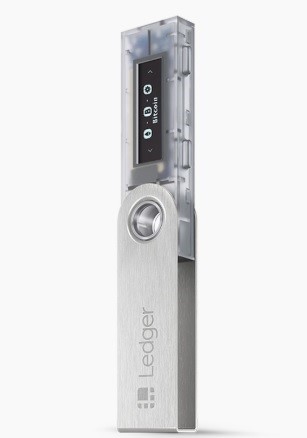
Ledger devices support NEAR through Ledger Live and third‑party interfaces like MyNearWallet and Meteor Wallet. You can stake NEAR, manage NFTs, and interact with DeFi protocols while keeping signing operations on the hardware device. For anyone holding a meaningful amount of NEAR, Ledger delivers the strongest combination of security and ecosystem compatibility available.
2. Meteor Wallet
Meteor Wallet has emerged as one of the most popular NEAR‑native browser extension and mobile wallets. It supports token swaps, staking, NFT management, and direct connections to every major NEAR dApp through a clean, intuitive interface.
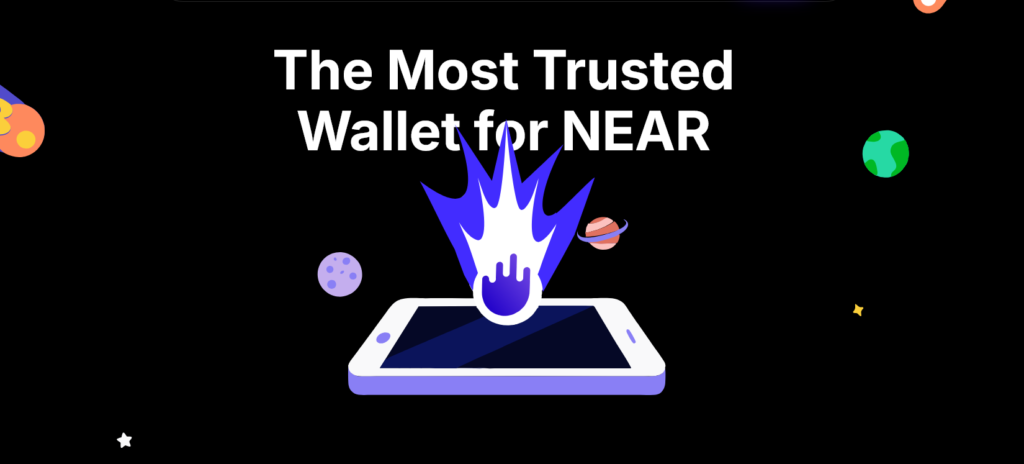
Meteor Wallet also integrates NEAR’s chain abstraction features, letting users manage assets across multiple chains from a single account. It supports Ledger hardware wallet pairing for users who want the convenience of a hot wallet combined with cold storage security. For daily use within the NEAR ecosystem, Meteor Wallet is one of the strongest defaults.
3. HERE Wallet
HERE Wallet focuses on making the NEAR mobile experience as smooth as possible. Designed for iOS and Android, HERE Wallet supports NEAR staking, token transfers, NFT browsing, and dApp connectivity through WalletConnect.
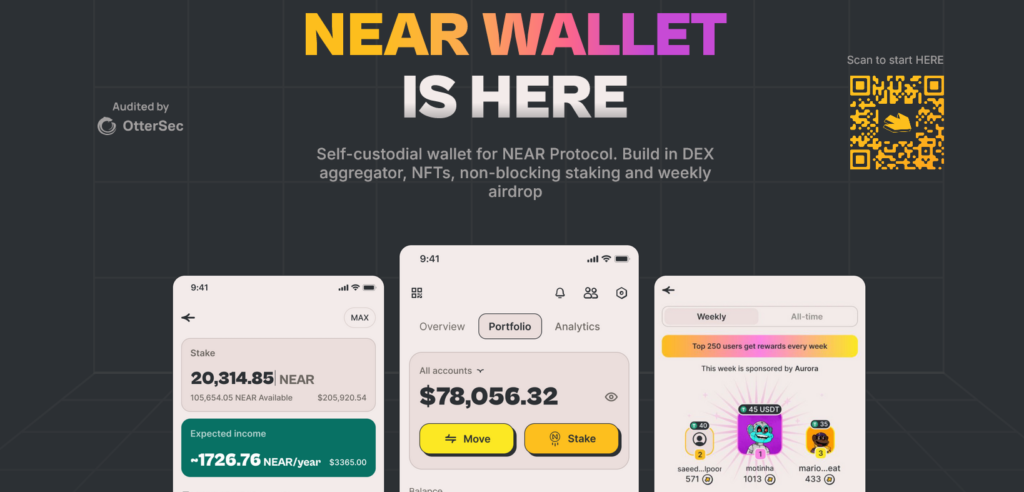
One of HERE Wallet’s standout features is its built‑in DeFi dashboard, which lets users track positions, yields, and liquidity across NEAR‑based protocols without leaving the app. Staking returns can be monitored directly, and the wallet supports both NEAR and Aurora assets. For mobile‑first users, HERE Wallet delivers a polished experience that rivals any mobile crypto wallet.
4. MyNearWallet
MyNearWallet is a well‑established web‑based wallet built by Kikimora Labs. It remains one of the most reliable non‑custodial interfaces for storing, staking, and managing NEAR tokens.
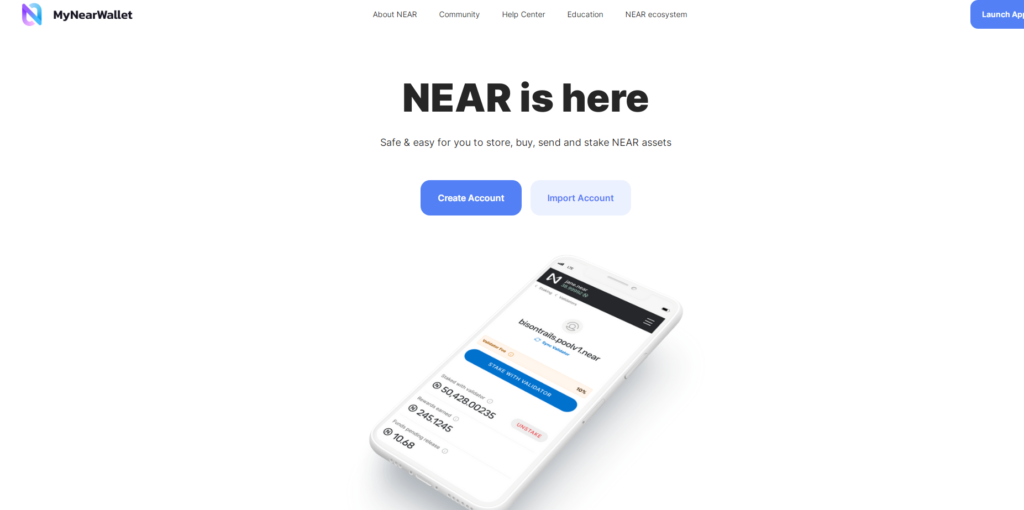
MyNearWallet supports Ledger integration, token swaps, staking to validators of your choice, and NFT management. The team maintains an active presence on social media and provides responsive live chat support. For users migrating from older NEAR wallets or looking for a straightforward browser‑based wallet with a long track record, MyNearWallet remains a solid choice.
5. Trust Wallet
Trust Wallet continues to be one of the largest multi‑chain mobile wallets, and it has supported NEAR and Aurora assets for several years. The wallet is backed by Binance and serves over 80 million users globally by 2026.
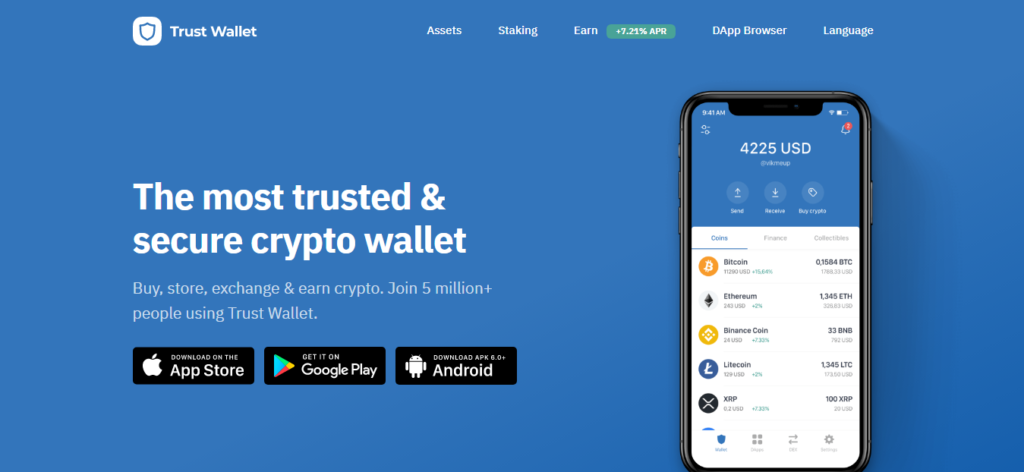
Trust Wallet supports NEAR staking directly inside the app, along with a built‑in Web3 browser for accessing dApps. The wallet stores private keys locally and protects them with biometric authentication. While not NEAR‑native, Trust Wallet works well for users who want a single place to manage assets across dozens of blockchains.
6. nearPay
NearPay offers a unique combination of a non‑custodial wallet and fiat on‑ramp services tailored to NEAR users. Available on web, iOS, and Android, NearPay supports NEAR, BTC, ETH, USDT, and several other assets.
Users can buy crypto with debit or credit cards, swap between supported assets, and withdraw funds to bank accounts. NearPay also issues a prepaid crypto card available in the European Economic Area and the UK, allowing users to spend crypto holdings directly. Customer support is available around the clock, and the platform has maintained a strong security record.
7. Nightly Wallet
Nightly Wallet has grown into a well‑regarded multi‑chain browser extension and mobile wallet that supports NEAR, Solana, Sui, Aptos, and several EVM networks. Its multi‑chain design appeals to users who move between ecosystems and want a single wallet interface.
Nightly supports NEAR staking, token swaps, NFT management, and dApp connectivity. The wallet encrypts private keys locally and does not require any personal information to get started. For users who value cross‑chain flexibility alongside native NEAR support, Nightly is a practical pick.
8. Guarda Wallet
Guarda Wallet remains a reliable multi‑platform wallet for storing, swapping, and staking digital assets. It supports NEAR alongside over 400,000 other cryptocurrencies and tokens across desktop, mobile, and web versions.
Guarda’s interface is beginner‑friendly, and its customer support team is among the most responsive in the industry. Private keys are encrypted and stored on the user’s device, and no KYC is required to use the wallet. For NEAR holders who also manage a diverse portfolio across multiple chains, Guarda offers a straightforward all‑in‑one solution.
Frequently Asked Questions (FAQs)
Is NEAR crypto a good investment?
NEAR has established itself as a technically capable layer‑1 blockchain with strong developer activity and a growing user base. Its chain abstraction stack and focus on consumer applications make it a distinctive ecosystem. Like any crypto asset, NEAR carries risk, and whether it fits your portfolio depends on your investment goals and time horizon.
What is the NEAR token used for?
NEAR is used to pay transaction fees, stake for network security, and vote on governance proposals. Stakers earn rewards by delegating NEAR to validators, and developers who deploy smart contracts on the network also use NEAR for execution costs.
Can you use MetaMask with NEAR?
MetaMask does not natively support the NEAR blockchain because NEAR is not EVM‑compatible by default. However, you can interact with NEAR‑based applications through MetaMask by using the Aurora network, an EVM layer built on top of NEAR Protocol. For native NEAR support, wallets like Meteor, MyNearWallet, or HERE are better choices.
The Bottom Line – The world needs NEAR
NEAR Protocol has come a long way since its mainnet launch. Its sharded architecture, chain abstraction work, and developer‑friendly account model give it real staying power in the increasingly crowded layer‑1 market. While networks like Ethereum, Solana, and Avalanche still command larger total value locked, NEAR has built a unique position around user experience and cross‑chain accessibility.
Wallet infrastructure has kept pace with the network’s growth. Whether you choose hardware storage with Ledger, a NEAR‑native wallet like Meteor or MyNearWallet, or a multi‑chain option like Trust Wallet or Nightly, the right choice depends on how actively you use your NEAR tokens.
What do you think of the NEAR protocol? Let us know in the comment section below.